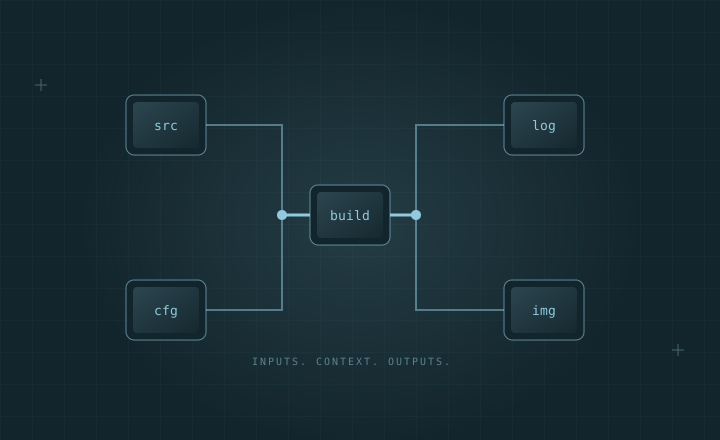
When a build behaves differently from the previous one, the most useful question is often not “what command did you run?” It is “what exact inputs did that command see?”
This is a documentation checklist for build context. It is not a claim that recording metadata alone makes a build reproducible.
Record inputs, not just labels
A branch name is convenient for people, but it can refer to different commits over time. Record the revisions used for the build alongside configuration and tool versions.
For a Yocto workflow, useful context can include the machine, distribution, image target, layer revisions, and relevant local configuration. Treat credentials and internal paths carefully before sharing any record publicly.
Keep the summary readable
A small manifest should answer ordinary questions without requiring someone to open a long console log:
# Illustration only: replace these fields with your actual build context.
image = "example-image"
machine = "example-board"
distro = "example-distro"
source_manifest = "revisions.json"
configuration_snapshot = "config-redacted.tar"
The real implementation should store immutable identities where possible. The point of this example is its structure, not the placeholder values.
Separate logs from conclusions
The full log is evidence. A summary is interpretation. Keep both, and avoid replacing the original evidence with only a pass/fail label.
A helpful summary lists the artifact names, known deviations, test results, and the source of the version identifiers. A release candidate that was built successfully still needs whatever product qualification the project requires.
Make changes easy to compare
Choose a stable format. Sort lists consistently. Avoid putting unrelated timestamps into every line of a generated summary. Small decisions like these make a diff easier to review.
An engineer should be able to see what changed without first subtracting a page of incidental formatting noise.